A reader finishes a novel about someone who wrecked something, and afterwards the question stays where it was left: what happens once the damage is done and everyone has seen it? That question is usually what sends people looking. Searches for “Jacob Marley Publications books about second chances” tend to arrive after a title has been read rather than before, which says something about what this catalog leaves behind.
The books answer through story rather than advice. What they share is a moment (the point at which the ordinary way forward closes) and three different things that follow it: a chance, a repair, a restart. Those are not the same thing, and much of the confusion around this shelf comes from treating them as one.
What a Second Chance Means in a Story
In fiction, a second chance is a structural event rather than a mood. It is the moment the usual route closes and the story has to build another one, and it can arrive in an opening chapter or three-quarters of the way through. The catalog page puts the same idea in plain language: these are stories about people who have run out of the ordinary way forward, and each book follows what a person does once the usual options close.
Four questions are worth carrying into any of these titles. Who offers the chance? What does it cost the person who takes it? Is it taken at all? And what, if anything, does it repair? A novel can answer all four badly and still be about second chances, which is why the theme is more interesting than the endings it produces.
The Point Where the Ordinary Way Forward Closes
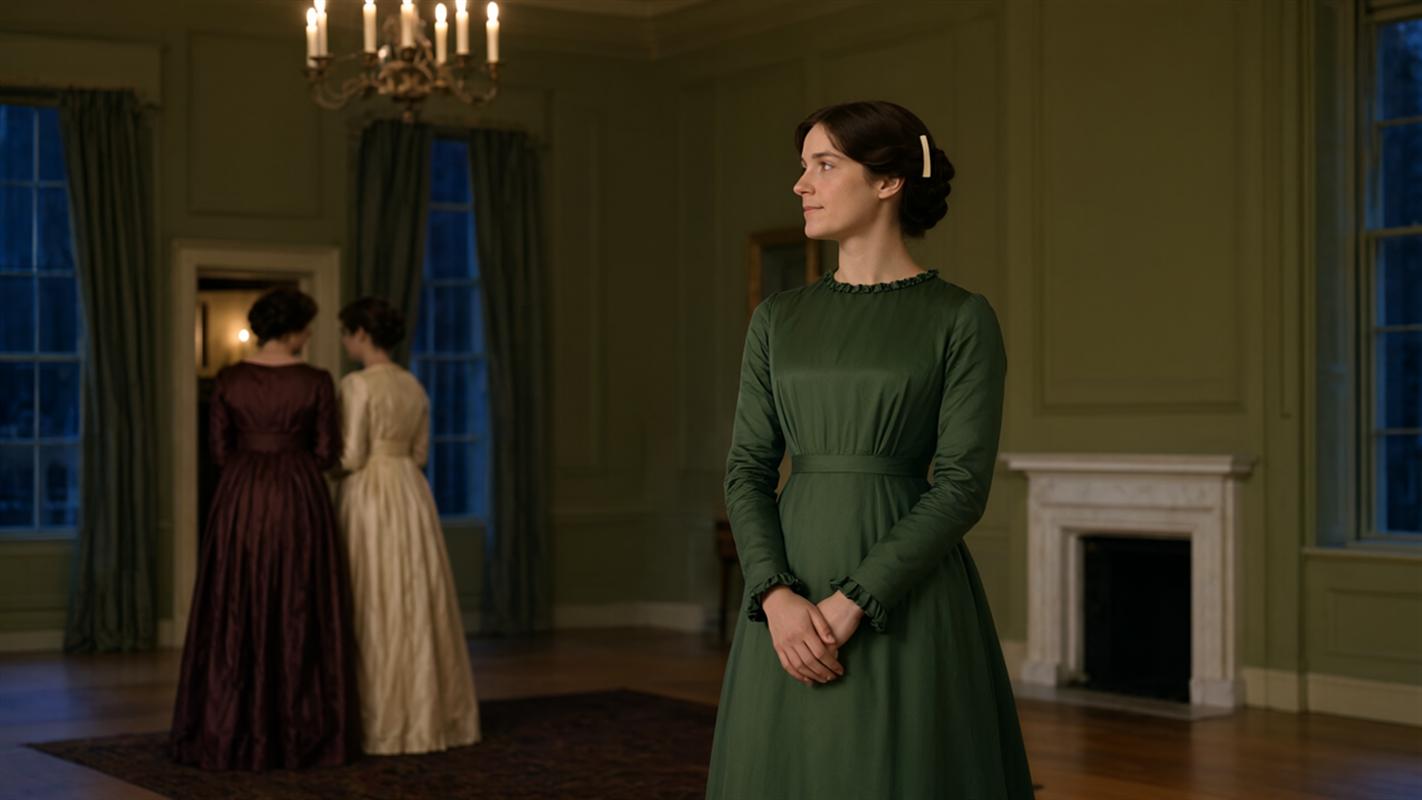
The catalog page names three situations, and they are worth reading side by side because they cover three kinds of book at once: a woman ruined by a carriage ride she never agreed to take, a farmer who sees an accident before it happens, and a principal sent to work inside a prison. A historical novel, a farm story, a prison account, all built on the same hinge.
Something else is worth noticing at that hinge. Two of the four novels in the Voices of Victorian Women quartet open with harm done to the heroine rather than by her, which puts the reader beside someone who did not choose the event that rearranged her life. A second chance can be handed to a person or demanded of one, and the two feel nothing alike. The resemblance between the three situations shows up more clearly in the full Jacob Marley Publications catalog than in any single title.
Moral Repair Is Not the Same as a Fresh Start
A fresh start is a change of circumstances: a new town, a new job, a new name on a lease. It can be arranged without anyone agreeing that a wrong occurred. Moral repair asks a harder set of questions, about who was harmed, what is owed, and whether the debt can be paid at all, and none of that can be arranged in advance; it can only be worked at. The books about moral repair by Jacob Marley Publications keep that distinction in view, which explains how rarely they close with the ledger settled.
Brady’s Journey: Touching on Pridefulness turns the question inward. John Leslie Hart’s allegory sets self-love against pridefulness on the catalog card: self-love forgives where pridefulness condemns, opens where pridefulness closes, welcomes where pridefulness shuts others out. The counterfeit is the interesting part, because a reader will recognize the condemning version in a character long before seeing it anywhere closer to home.
All My Friends Are Felons turns the same question outward, where the repair is institutional. Mark Hugentobler was a coach and high school administrator before his local school board “sentenced” him to prison; he became academy principal at the Central Utah Correctional Facility in Gunnison, Utah, where the card says he changed things by recognizing the potential of many inmates, and concluded the system is broken. Repair at that scale is not a fresh start for one person but a claim about how an institution ought to work. The years behind that claim, and the classroom it came from, are set out in the overview of Mark Hugentobler’s prison book.
Three Shapes the Turn Takes in This Catalog
Sorting the shelf by the shape of the turn, instead of by author, produces three patterns that are more useful to a reader than the genre labels. A chance handed over by someone else, a chance forced by consequence, and an interior turn a character has to make without help. Most of the titles hold one shape and touch another.
- Handed over: The Basra Pearls has an older childhood friend, Frank, marry Millie to spare her the scandal of a carriage ride with the wrong man, then rely on her as his equal while investigating a case that could hang an innocent man.
- Forced by consequence: Tattered Silk sends Anna to the workhouse on a jealous lover’s word; the kind woman who befriends her there turns out to be a manipulator, and a false accusation of stealing carries her into a street war.
- Forced by consequence: Relevé gives Erin, a dancer who combated scoliosis in her youth, a public humiliation on a rigged reality show, and then a goal: prima ballerina.
- Interior: The Reality Show follows Carrie Carnegie, an emotionally distant socialite, as she works out how much of her life has been arranged by other people.
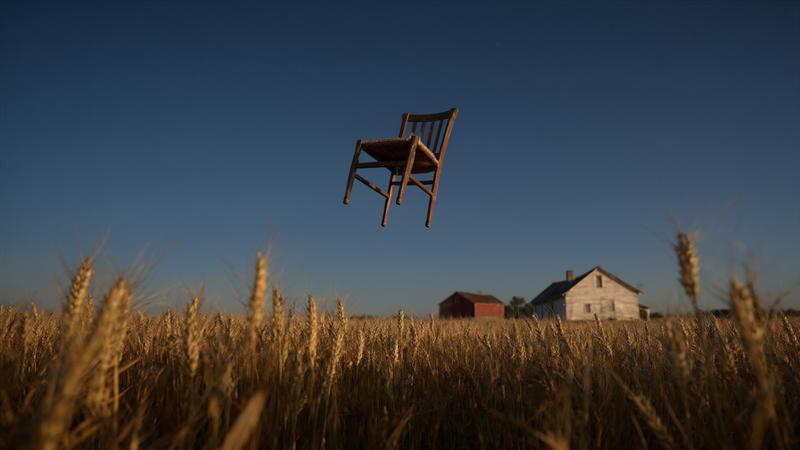
- Interior, in comic form: Marry Up! leaves farmer Og unable to court the woman he loves until a passing psychiatrist calls the elf he keeps seeing his inner child, and the town gets hold of the advice.
Naming the shape is not a ranking. It is one way to know which book to pick when a reader wants the chance given, or taken, or earned slowly, and each catalog card states its own situation more plainly than any summary of the theme can.
Starting Again Is the Hardest of the Three
Repair looks backward at a debt. Starting again looks forward, at an ordinary week that has to be lived through, and it arrives without the relief of having settled anything first. That is the least dramatic of the three and the one that takes longest, which is why so few of these books end where a reader expects them to.
Into the Seed makes a joke of it. Sherman Hart’s zany 1970s flower child book has an uppity turtle invite others inside her shell for tea and tell the boy there is still hope for him, though her beady eyes suggest she is less sure than her words. Hope delivered by an unreliable messenger is a fair description of how encouragement usually reaches people, and the comedy keeps the sentiment from turning sweet.
For the Latter-day Saint in Crisis takes the spiritual register instead. John Waterbury writes about basic but obscure truths concerning lasting happiness at the points where life feels overwhelming and family expectations seem impossible, and the card’s point is that help is not reserved for people who already have things steady. The title is filed under Spiritual Help, and Waterbury’s author note records forty years as a licensed professional counselor, which describes the register of the book rather than making a clinical claim about it.
Why the Publisher’s Own Name Belongs to This Theme
The company takes its name from Dickens. Jacob Marley lived a miserly life and, after his death, changed course in an effort to benefit mankind, which is a strange patron for a fiction list until the theme is taken into account. The publisher borrows that turn rather than the plot: the catalog is original fiction, not a retelling of A Christmas Carol, whatever a search for the name may suggest.
The publisher’s account of why the name was chosen returns to the idea in its own words, describing books that can work “sometimes as mirrors.” A mirror is not a second chance either. It is the moment before one, and a novel about repair can do that much without settling anything.
Genres Sit Beside the Theme, Not Against It
Six labels organize the catalog, and not one of them describes the moral question a book asks. Action Romance, Women’s Historical Literature, Reality Show, Farm Life, Spiritual Help, Prison Reform: setting, subject or mode, every one. A reader who wants the theme has to cross those labels, and the crossing is where the catalog stops feeling tidy and starts feeling like a body of work.
Kate L. Hart writes both the Victorian quartet and the reality-show series, and the quartet’s four novels stand alone even though readers who want the sequence begin with The Lark; Kate L. Hart’s series and reading order guide separates the two paths, which is the part the labels cannot do. John Leslie Hart arrives from newspaper photography and editing, more than 40 countries, and a period as a lay religious leader, and This Our Faith sets a farm wreck, doctor bills and a coming storm against a narrator’s faith; the guide to John Leslie Hart’s farm-life novels follows that thread through the rest of his work.
None of that background explains a novel on its own. It may help explain why the same turn keeps appearing in places as far apart as a London season and a prison classroom.
Who These Books Suit, and What They Leave Open
Read as fiction about flawed people seeking the good, these books ask a reader to stay with someone through the stretch where the damage is still visible. That suits a reader who wants the cost of a turn shown rather than skipped, and it frustrates a reader who wants the turn to arrive early and be finished quickly.
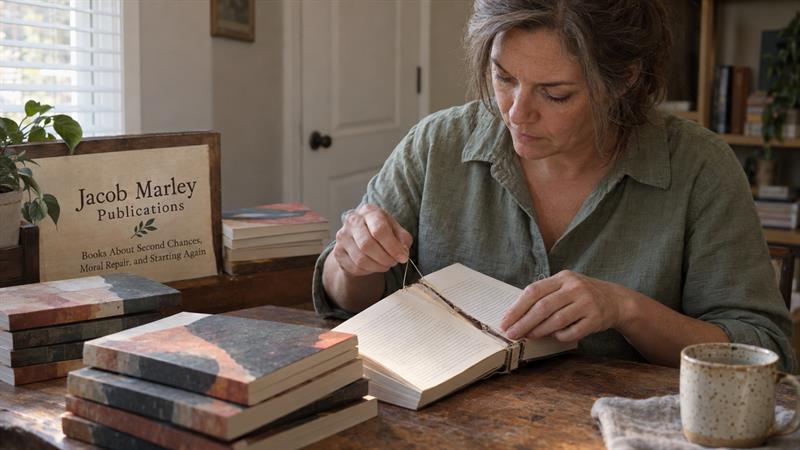
The catalog holds fourteen titles, two series and seven standalone works, from six authors, published from a home in Kaysville, Utah. The fiction is not a self-help method with a plot attached. There are no steps for a reader’s own life, no exercise to complete, and no reading order that makes the theme easier to reach: the books show a turn rather than prescribing one.
Prices are printed on the catalog cards, at $9.99, $14.99 or $15.95 depending on the title, and each card carries a link to the book on Amazon.
Key Takeaways
What the reading above comes down to:
- Second chances here are structural: the story changes course, not the character’s mood.
- A fresh start changes circumstances; moral repair asks who was harmed and what is owed.
- The turn arrives three ways: handed over, forced by consequence, or made alone.
- Starting again is quieter than repair, and it takes longer to live through than to describe.
- The six labels describe genre and setting, so the theme has to be followed across them.
Conclusion
The way into this shelf is to watch what a character does once the usual options close, and to notice that the catalog keeps returning to that moment, through a London season, a farm, a televised contest and a prison classroom, without ever making the turn easy.
Jacob Marley Publications works from a home in Kaysville, Utah, as an independent publisher of original fiction, and takes its name from a character who changed course too late to enjoy it.