
A reader who types “Sherman Hart Into the Seed” into a search box is usually trying to work out what kind of book it is before spending money on it. The catalog answers with a title, a name, and a line above them: A 1970s Flower Child Book. What it does not answer is the question underneath — what kind of reading experience waits inside. This guide takes the card at its word, walks through the images it publishes, and says plainly what Into the Seed by Sherman Hart is and what it is not.
What the Catalog Card Actually Says
The card sits on the publisher’s Books page, with a line above the title and Sherman Hart’s name beneath it. The description opens with a question rather than a summary: “Growing bigger, bigger and bigger, to fit inside a dandelion seed?” From there it says only that John discovers a world where nothing is as it seems. That is the whole of the premise as the card gives it — a boy, a seed, and a world that will not hold still.
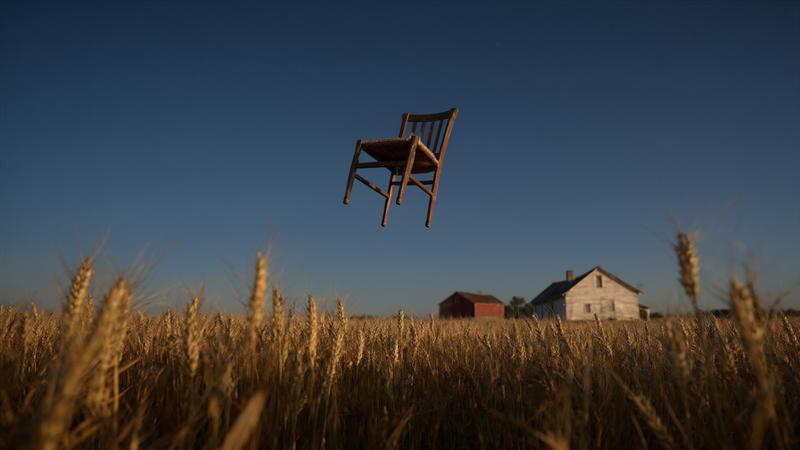
What the card lists next is a set of things rather than a sequence of events: cookies that scream when bitten, ice cream cones hanging in the sky that are quite something else, an uppity turtle who invites others inside her shell for tea. It ends by saying a zany new adventure awaits at every corner. It also carries a Buy on Amazon link, and it prints no price, no page count and no format, so a reader who wants those details will not find them here. The card describes; it does not specify.
Why the 1970s Label Is a Register, Not a Setting
The line above the title names a decade, which invites a reasonable assumption: that the story is set in the 1970s. Nothing on the card supports it. There is no date in the description, no period detail, no claim of historical fiction. The publisher calls Into the Seed a 1970s flower child book, and the phrase reads as shorthand for mood and lineage — the counterculture’s fondness for the symbolic, the playful and the inward — rather than as a setting a reader will visit.
The catalog makes the same move elsewhere. Most cards carry a genre label such as Farm Life, Prison Reform, Spiritual Help, Action Romance or Reality Show; one carries a descriptive line instead, “An amusing mental counseling allegory.” A line like that tells a reader how to approach a book without announcing what happens in it. The 1970s note works the same way, and it is the only label on the shelf built from a decade rather than a genre.
How Magic Realism Works in a Book Like This
Magic realism, as the term is generally used, describes fiction in which the impossible is narrated as though it were ordinary. The turtle and the cones in the sky are not presented as marvels; they are simply there. The world keeps its own rules, and the reader is asked to accept them rather than solve them. That separates the mode from fantasy, which usually explains its own machinery; magic realism leaves the machinery where it lies and lets the image do the arguing.
The publisher’s site applies the term to John Leslie Hart’s writing rather than to Sherman Hart’s. Sherman Hart’s card never uses it. That gap is worth noticing, because it makes the label a reader’s tool here rather than the publisher’s claim: the imagery in the description fits the mode, and the description does not insist on it. Readers who want to see the term used deliberately can look at John Leslie Hart’s books, where magic realism is used with restraint and purpose and compare the two approaches.
Reading the Dandelion Seed and the Turtle’s Tea
The dandelion seed is the first figure the card offers, and it arrives as a question about scale: growing bigger and bigger in order to fit inside something small. Read that way, it is a joke about the direction growth is supposed to run, and an invitation to wonder whether getting larger and fitting in are the same thing. Nothing in the description settles the answer, which is part of what a book built on images asks of a reader.
The turtle carries the rest. Over tea inside her shell, she pats John’s curly locks and says: “From here, it looks like I went from the inside to the outside, when all the time I thought I was on the outside going to the inside.” Then she tells him, “There’s still hope for you, boy,” and sighs, with a hopeless look in her beady eyes. The joke and the consolation arrive together, and the hopeless look keeps either one from settling the matter.
An Adventure Guide Rather Than a Summary
A book described this way is easier to enter as a run of images than as a plot to be followed. The three encounters on the card — screaming cookies, cones in the sky, a turtle’s tea — give a reader a method: take each wonder as it comes, and ask what it is arguing before asking where it leads.
That method keeps the turtle’s inside-and-outside line in view while the next wonder arrives, which suits a story the card calls an adventure at every corner. It also sets an honest expectation. A reader who wants a chapter-by-chapter shape, a stated setting or an announced moral will not find those on the card, and this guide will not invent them.
Who the Book May Suit, and Who Should Look Elsewhere
Readers who enjoy fable, allegory and restless invention are the natural audience for a card like this one, as are readers content to hold an image open for a while instead of resolving it. The description’s tone — playful, a little absurd, warm underneath — suits someone reading for texture and suggestion rather than for a lesson delivered at the end.
Readers who want a documented decade, a realist family story or a stated age band should look elsewhere, or ask before buying, because the card states none of them. The About page is worth a look for the same reason: it gives background paragraphs for the other writers on the shelf and none for Sherman Hart, whose entry carries the title and a link to the book and stops there. Readers weighing the whole shelf can use a theme map for choosing where to start in the catalog.
Where It Sits in the Rest of the Catalog
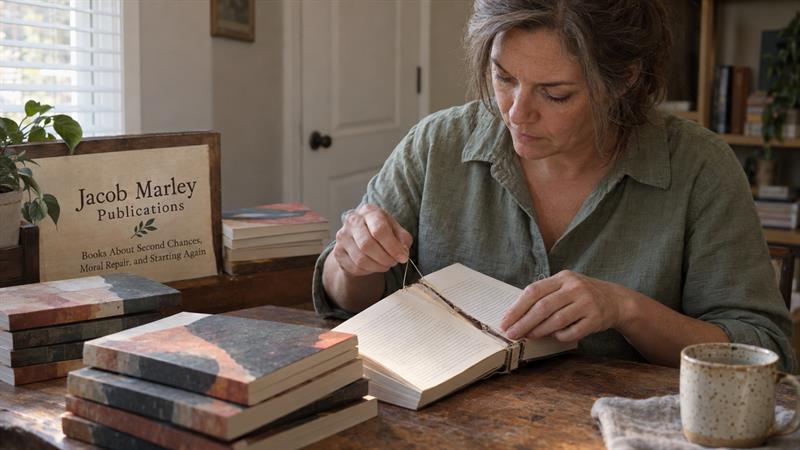
Into the Seed sits in a catalog of fourteen titles across two series and seven standalone works, published by Jacob Marley Publications, a home-based independent publisher in Kaysville, Utah. The press says every book it publishes is read closely by the people whose name is on the company, and that new titles go up as they are copyrighted. That is a slow way to build a list, and it is the reason a card like this one can exist at all.
Its neighbors are labeled by genre. Into the Seed is the one framed by a decade. The press takes its name from the Dickens character Jacob Marley, the figure of greed reformed, and describes its books as stories about people who have run out of the ordinary way forward — a frame broad enough to hold a book about a prison and a book about a dandelion seed without stretching.
The whole shelf is on the publisher’s full list of books, which is also where this card lives, and the question of why a small press takes its name from a Dickens character is answered on the About page, alongside the notes on the writers.
Questions Worth Asking Before You Choose
A few questions are worth answering before the book arrives, because the card deliberately leaves them open.
- Do you want a story that leans on symbol, or one that follows a clear arc?
- Are you reading for reflection, or for a conclusion that settles things?
- Would a book defined by mood rather than genre suit the mood you are in?
- Does a story that refuses to explain itself appeal, or would a grounded setting fit better?
- How much do you want to know about the author before you begin?
Key Takeaways
The card is short, and most of what a reader needs from it fits in a few lines.
- Into the Seed is Sherman Hart’s book, published by a home-based independent press in Kaysville, Utah.
- The 1970s line is a register of mood and lineage, not a setting the story documents.
- The description gives images instead of a plot, with a turtle’s tea at the center of them.
- No price, page count, format or author biography is published for this title.
Conclusion
Into the Seed by Sherman Hart offers a boy, a seed and a world where the ordinary keeps turning strange. The publisher’s label names the mood; the description names the wonders. Between the two, a reader can decide whether this is the kind of book to open.
If a question remains — about the book, the shelf it sits on, or what else the press has published — send the publisher a question directly, and the contact page’s own note applies: every message is answered by the publisher itself.